How Tequila Is Made, Step by Step: From Agave to Bottle
Hola Tequila Tour •
Tequila is made by harvesting the heart of the blue agave, cooking it to turn its carbohydrates into sugars, extracting the juice, fermenting it and distilling it. Some tequilas are then aged in oak barrels. From planting to harvest alone, the agave takes between six and eight years.
Mexico's official standard for tequila, NOM-006-SCFI-2012, lists the stages: harvest or jima, hydrolysis, extraction, formulation, fermentation, distillation, aging where applicable, filtration and bottling. This is what each one means in practice.
What plant is tequila made from?
Tequila can only be made from Agave tequilana Weber, blue variety. The standard allows no other species, and the plant must be grown and harvested within the territory protected by the denomination of origin. That is why an agave spirit made from another species, or outside that territory, cannot legally be called tequila.
What is the jima?
The jima is the harvest of the mature agave. The jimador cuts the plant from its base and trims off the leaves with a coa, a sharp round-bladed tool, until only the piña remains: the heart of the plant, and the only part used to make tequila.
Why is the agave cooked?
Agave is cooked because its carbohydrates, mainly inulin, cannot be fermented until they are broken down into simple sugars. The standard calls this step hydrolysis.
There are three main approaches:
- Masonry ovens: the traditional method. Slow, usually taking days, and associated with sweeter cooked-agave notes.
- Autoclaves: industrial pressure cookers that do the same work in far less time.
- Diffusers: machines that extract the sugars from the raw agave first and convert them afterwards. Fast and efficient, and generally the most industrial route.
How is the juice extracted?
The cooked piñas are shredded and washed to separate the sweet juice from the fibre. Most factories use mechanical mills. Some artisanal producers still use a tahona, a heavy stone wheel that crushes the agave slowly.
What is the difference between 100% agave and regular tequila?
A tequila labelled "100% agave" ferments only sugars from blue agave. A tequila without that label must have at least 51% of its sugars from blue agave, and up to 49% may come from other sources, such as cane sugar.
This is decided at the formulation stage, before fermentation, and it is the first thing worth checking on a label.
How long does fermentation take?
Fermentation usually lasts from a few days to about a week or more, depending on the producer and the yeast. Yeast turns the sugars in the must into alcohol and carbon dioxide, and it also creates many of the aromas that reach the glass.
How many times is tequila distilled?
Tequila is normally distilled twice. The first run, called destrozamiento, produces a low-strength liquid known as ordinario. The second, called rectification, raises the alcohol and refines the spirit. Some producers distil a third time, though it is not the norm.
Bottled tequila must have between 35% and 55% alcohol by volume.
How long does each type age?
Aging times are set by the official standard:
- Blanco or plata: may rest for less than two months in oak, or not at all.
- Reposado: at least two months in oak.
- Añejo: at least one year in oak containers of no more than 600 litres.
- Extra añejo: at least three years in oak containers of no more than 600 litres.
- Joven or oro: a blend of blanco with aged tequilas, or a blanco mellowed with permitted ingredients.
Age tells you about wood and time, not about quality. A good blanco shows the agave most clearly.
Where can you see the process?
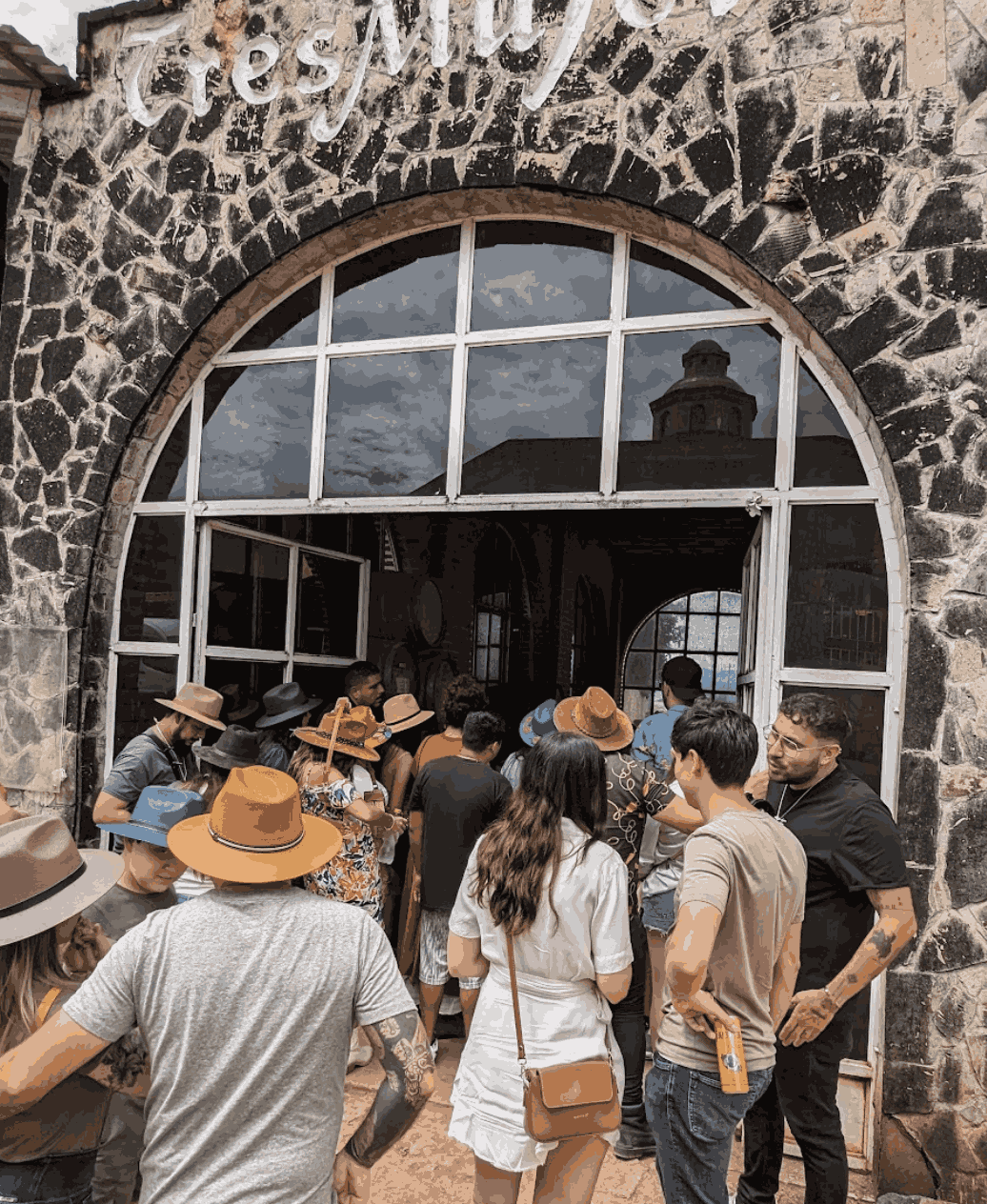
You can see most of it in the Tequila Valley, about 60 kilometres from Guadalajara. On our Tequila tour, you watch a jima demonstration in the agave field, visit the artisanal Tres Mujeres factory and its underground cellar, and taste blanco, reposado and añejo at Don Valente.
Seeing a piña split open and smelling the cooked agave explains the process better than any diagram.
Quick summary
Blue agave grows for six to eight years, is harvested by jima, cooked, milled, fermented, distilled twice and, in some cases, aged in oak. The label tells you whether it is 100% agave and how long it spent in wood.